
The Ethics of Spectacle and the Limits of Empathy in Maltese Dark Tourism
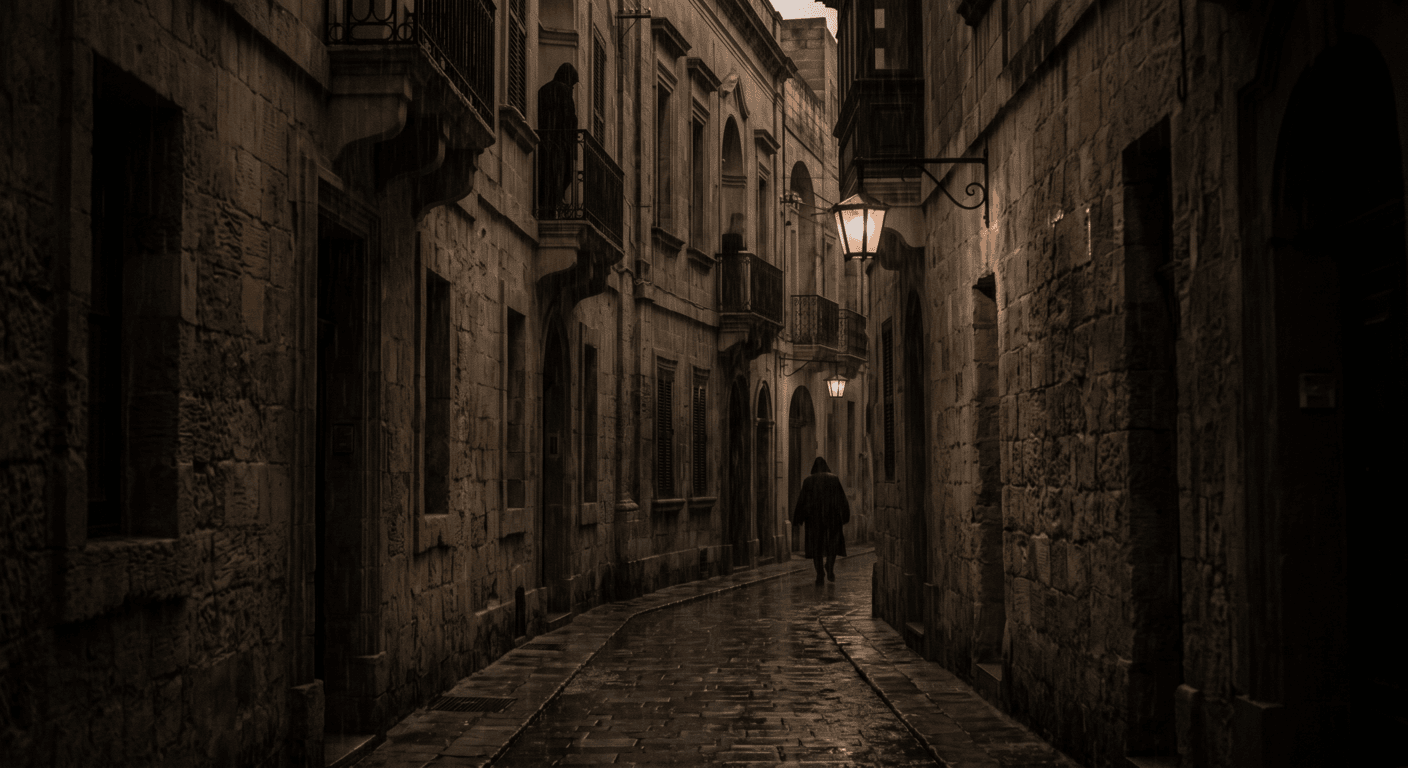
A unique space within any cultural heritage, Dark tourism is the act of visiting sites associated with death, disaster, and suffering. Its range is wide, varied and growing. Taking the most infamous Holocaust memorials to battlefields, prisons and cemeteries to derelict spots. It engages visitors to pass through the emotional and sometimes uncomfortable encounters with one radical nagging thought, the tension between ethical remembrance and spectacle.
As a small country, Malta is overwhelmingly rich in dark tourism, with its countless sites and overflowing history. Maybe not promoted as much as other countries, its popularity is increasing steadily.
Here we are going to attempt to explore the ethical rigidities of turning past sufferings and events into consumable experiences. We shall be using different case studies to peel the boundaries of empathy, moral responsibility and spectacle.
The term Dark tourism has been academically framed through a number of perspectives but most notably by A.V. Seaton (1996), who introduced the term ‘Thanatourism’ to distinguish between passive remembrance and active, sometimes a morbid fascination with death. Additionally, John Lennon and Malcolm Foley (2000) emphasised the postmodern condition of consuming death through spectacle and suggested that dark tourism often masks real suffering beneath layers of commodified nostalgia. Richard Sharpley (2005) on the other hand turned the attention to the ethical complexities of this consumption, especially in the postcolonial settings, but all provide a setting of empathy vs morality.
When looking at memory and memory studies there is further insight, particularly when we look at Pierre Nora’s (1989) concept of “lieux de mémoire” (sites of memory), suggesting that space and remembrance intersect performatively. Taking this into our context and perhaps widening even further to the whole Maltese context, this intersection is heightened by the physical compactness of the island, where historical trauma is embedded within everyday spaces. Paul Connerton (1989) supplements this with the idea of “habitual memory” where our normal rituals become a collective part of how the society is shaped but then goes on to add that modernisation contributes to losing part of that same memory or habit.
We must take into account the concept that in a number of instances tourism sites attempt to reproduce the experience of tragedy but more often than not due to representation they lose or dilute the real historical authenticity to favour more marketable demand. This fine line happens due to supply and demand or to a more grievous aspect of a “swim or sink” approach.
This framework is inherently visible for Malta, where the island’s size and density produce a reminder that every corner has a story and yet not all can be ethically commercialised. Thus, dark tourism in Malta is not merely a business model but it is a negotiation with collective memory, cultural trauma, and public conscience.
Memory, Spectacle & Consumption
To gain and perform memory is to mediate the past through symbols, understand the narratives and interpret the cues. In dark tourism, this performance is both sacred and commercial. While some sites operate as solemn reminders, others veer toward spectacle overselling with romanticism or dramatising death for emotional or commercial gain.
Malta is deeply Catholic and can be considered as a war-scarred nation, naturally leaning into such performances. Chapels are open portals to martyrdom; abandoned hospitals dictate stories of plague and isolation. Most of the islands’ forts are treated as amphitheatres of violence. Therefore the main question of such spaces and areas and put into consumable experiences and then questions are raised. Primarily who curates these memories, and who profits. Are there areas of communities that are silenced when an area is transformed.
This all leads into interpretation. If a group of individuals are handed a script, whatever the script, each engagement, perspective, description and re-enactment of the passage is different and therefore would it truly be reflective of what the original script is to convey. The same happens when one delivers the trauma for a dark tourism site, the narrative is consumed and affects each individual differently.
Case Study: Lazzaretto, Manoel Island
The Lazzaretto on Manoel Island is one of Malta’s most compelling dark heritage sites. Originally used as a quarantine hospital and playing host to plague victims, war casualties and social outcasts. Later, it also served as a naval hospital, a World War 2 headquarters and now a slowly crumbling ruin of past pains that is amidst controversy.
Its decaying halls invite eerie reflection and a clear opportunity to look back to what war and sickness produce. In recent years numerous proposals for its restoration have surfaced, oscillating between luxury development and cultural preservation. Restoration efforts have positioned it as a site of both historical importance and potential commercial tourism. But there is a problem. Visitors often seek the thrill over understanding and the site risks becoming a mausoleum of aesthetic decay rather than critical remembrance. Also, the Lazzaretto reflects Malta’s broader challenge. How can we present traumatic history without reducing it to a haunted house narrative or even a spectacle to widen private enterprises at the expense of the past tragedies. The site’s architecture is a labyrinth of different layers, one finds British naval inscriptions next to plague-era disinfection ovens as well as walls blackened by soot from centuries-old sanitation rituals.
Then there are the tales and myths. There are rumours that walls are sealed with lime and victims were trapped inside during epidemics; so was makeshift burial trenches that were never properly documented. Parts of the Lazzaretto were unofficially used for detaining colonial dissidents under the guise of medical quarantine. Oral testimony from locals say that they hear screams during full moons and flickering lights depicting lost patients. Such stories are unverified but illustrate the power of suggestion and this adds into the concept of dark tourism. They become self-sustaining myths. Ethically, these narratives must be balanced between the facts and the interpretive openness; a fine line between documentation and superstition. The Lazzaretto deserves more than ghost tour treatment, It had a crucial role in Malta’s medical, military, and colonial past and therefore should be curated accordingly and with respect.
Case Study: Sylvia King, Rabat
The murder of Sylvia King in Rabat sent a strong message the day after it all happened. Totally different from the usual lore, this case exemplifies a real-life horror. This even was not a mystery from the past, she was an accomplished national bowling champion, a prominent social worker with a potentially promising future and full life ahead. Her brutal death in 1993 shocked the county, she was gagged and burned alive, a gruesome event that is feared till this day.
However public memory has since retreated, only a small privately maintained monument marks the site, younger generation have no idea who she is as she is largely ignored by both the state and the tourism industry. Unlike heritage sites designed for visitor experience, the Sylvia King memorial sits alone overseeing a breath taking view, a rather unfitting remembrance. There aren’t any narratives, no souvenir stands, no performative mourning rituals. It sits in silence, unbranded and unmarketable, just like any other car accident memorial or plaque.
Susan Sontag warns against the desensitising effect of repetitive exposure to suffering (2003). Here, however lies a problem. Sylvia King’s murder lacks the historical distance that allows for safe commodification. It is too recent, too intimate and too ugly to be rendered into touristic product.
The moral conundrum here is different from older events. This is not about ghosts but it is about pain. It challenges dark tourism’s tendency to romanticise, forcing it to deal with the ethical weight of modernism. Should this incident be mentioned and included and therefore potentially reducing a tragic, human story or should we keep everything silent, ignoring it entirely and therefore eventually facing erasure. As a female athlete and national figure, her memory intersects with themes of gendered violence, media sensationalism, and social silence.
For dark tourism to engage ethically with this kind of site, it must do more than empathetic narratives, it must create the necessary space and offer critical context. Rather than converting tragedy into aesthetic, it must recognize it as testimony. There must be a balance, understanding that the victim’s relatives are still amongst us and healing.
Case Study: Haunted Malta – Myths , Mystery & Legends
Nowadays Malta has leaned into a haunted reputation. From the Black Knight of Fort St. Angelo to the cursed theatre in Valletta and many more, the local lore feeds the appetite for darkness. These narratives, most of which are passed down through generations are being co-opted by commercial entities for themed experiences, escape rooms, tours and social media content.
Taking the infamous Wied Qirda (Valley of Evil) in Żebbuġ. This valley carries a reputation as a place full of curses, ghost sightings and satanic mischief. It is definitely not promoted in official tourism channels but it is still increasingly referenced in online paranormal forums and local lore tours. The valley’s “darkness” lies in communal avoidance, an inherited cultural practice of steering clear, more of a habit that has been accepted rather than understanding the real purpose. People do not visit to learn why or the understand the meaning but they visit to feel unsettled. The risk here is not how to convey the narrative, it is more for the thrill.
Another famous local case is Villa Sans Souci in Marsaxlokk, which is an abandoned residence popular in ghost lore. Tales of hauntings, unexplained noises and apparitions circulate widely. Though the villa is architecturally significant, it has gained more notoriety for its supposed paranormal activity than for its heritage value. This begs the question about how a society reacts when a haunted house or location gain more public intrigue and notoriety than documented historical place or trauma.
In another slightly different example, a recurring tale about mysterious lights and spectral screams near a cave on the outskirts of Rabat which was later said to have been linked to a covert British intelligence operation during the Cold War. A similar story of a haunted passage, told to deter children and the curious from approaching the cave, which turns out to conveniently serve to mask the fact that the location may have functioned as an emergency comms relay station also has a double standard. The ghost story became the cover, the misdirection.
Such examples reveal the layered motives beneath certain narratives. The folklore serves a double function, as cultural entertainment and at times as deliberate historical camouflage. These ghost stories are not always innocent fabrications or ancestral tales, they can be instruments of narrative control. In this sense, Malta’s dark tourism can becomes a cipher for suppressed history, national security secrets and even political distractions.
Moreover, the creation of ghost lore around mundane or politically sensitive buildings (e.g., abandoned police stations or colonial intelligence outposts) conveniently repositions those spaces in the public imagination. A building haunted by a crying child becomes less threatening and less politically loaded from for instance one known for illegal detentions or interrogations. Thus, the ghost becomes a gatekeeper that is warding off memory.
This transformation reflects Malta’s broader struggle between safeguarding intangible heritage and monetizing it.
Ethics and Empathy in Dark Tourism
At the heart of dark tourism lies a moral question: can empathy survive commercialisation? Ethical engagement requires interpretation, education and emotional space. Many Maltese sites seem to lack this infrastructure. Tour guides become entertainers and silence is replaced with theatrics. The demand for dark tourism is not unethical by default. On the contrary, when curated with sensitivity, such sites can promote awareness, historical consciousness and even healing. The key here is to resist the slide into spectacle and therefore avoiding the trap of turning trauma into entertainment. Once the tourist and the guide understand this concept and more importantly embrace it then more sites may be available.
Heritage Malta, along with private curators, must confront this challenge. They have to create immersive experiences without losing the integrity of memory. Technologies like VR or augmented reality, guided reflections and storytelling can help, but only when used ethically. Educational links, factual interpretation and ongoing consultation with historians and even descendants of victims should become standard practice. A possible framework may include ethical review boards, professional or semi professional individuals in storytelling and factual narrative that go beyond the consumption of death.
The Conundrum of Morality versus Marketability
Within the Maltese context, there is particular friction between opportunity and restraint. Certain locations in Malta have great opportunity in their narrative and dark appeal. However, then remain largely inaccessible due to religious, political, or social sensitivities. This is the conundrum of having sites that are historically and emotionally potent, yet functionally off-limits for dark tourism interpretation.
Taking for instance, reclusive crypts or areas of ecclesiastical significance that house bones, relics and tales of spiritual suffering. Their gothic allure is undeniable, yet any attempt to commodify these spaces for a tourism product is met with institutional resistance. The Church’s moral authority, our deep Catholic identity, is a barrier to these sites. The idea here is that one cannot sell ghost stories about a crypt when most Maltese venerate it as a sacred place.
Moreover, as per our previous case study, some locations tied to modern tragedies, murders, suicides and other atrocities have an untapped tourism potential but remain locked behind a veil of respectability, and I dare say fear. For example, several rural chapels have known associations with execution narratives and crimes of passion but as they are maintained by religious or local community groups, there is a strong and rather adverse rejection to any form of tourism thus risking moral outrage.
This tension is characteristic of Malta’s unique challenge which is an overabundance of the past that is too politically or spiritually to utilise. Therefore the temptation to aestheticize suffering for gain clashes with the long-standing traditions of reverence, particularly in a nation where the boundary between heritage and sanctity is thin and fiercely protected.
Tourism developers and heritage professionals must walk a narrow path. They must consider how to reframe these stories in ways that are ethically viable but still marketable. One solution may lie in layered interpretation. For instance framing the site’s taboo nature as part of its mystery and allowing visitors to engage with uncertainty rather than spectacle. Alternatively, one may discuss the site’s stories in abstract or theatrical ways thus serving as a buffer and this would allow the story to live without directly violating cultural sensitivities.
Conclusion
Malta’s dark tourism scene is rich with potential and fraught with danger. The island’s compact geography and deep history make it an ideal location for exploring ethical remembrance. Through sites like the Lazzaretto, the mythos of Sylvia King, and haunted legends, we witness how memory is performed, consumed and often distorted.
To move forward, stakeholders must centre empathy, resist spectacle and elevate voices silenced by time. Dark tourism does not need to be exploitative, it can be redemptive, reflective and revolutionary. We only need to remember that the dead deserve more than applause, they deserve attention and they deserve justice.